
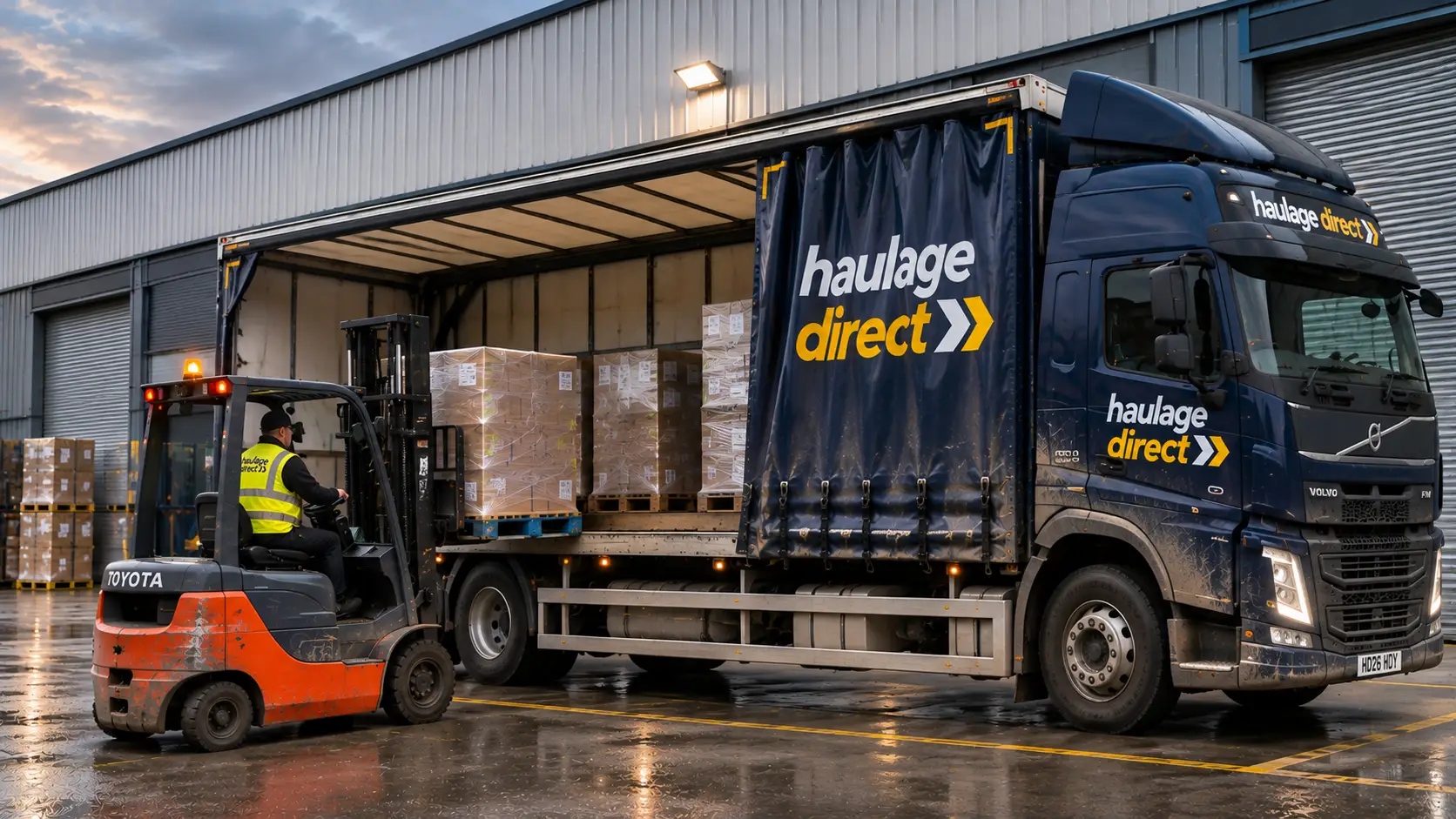
HGV transport is suited to commercial consignments that exceed the practical capacity of smaller delivery vehicles or require purpose-built freight equipment. Industrial products, packaged goods and building materials may travel on HGVs with curtain-sided bodies, box bodies or other appropriate equipment.
Rigid lorries and articulated combinations offer different loading capacities, turning requirements and access characteristics; choosing between them depends on more than pallet count alone.
Provide gross shipment weight, individual item dimensions and site access information so that vehicle suitability can be checked before dispatch.

Need a quotation for hgv transport? Tell us where your goods are travelling, what needs moving and when the delivery is required. Call 0203 479 8980 or email info@haulagedirect.co.uk to discuss a suitable transport arrangement.
Rigid HGVs can be better suited to tighter industrial estates, while articulated combinations offer greater trailer capacity where turning space and access permit. Neither vehicle type is automatically appropriate for every load.
Where a single customer needs exclusive use of a vehicle, curtain sider haulage may be more appropriate.
Rigid lorries and articulated combinations offer different loading capacities, turning requirements and access characteristics; choosing between them depends on more than pallet count alone.
A larger lorry is not always the best option: restricted entrances, weight limits and limited unloading space may favour a smaller rigid vehicle.
For consignments requiring different loading access or equipment, consider full load haulage.
Industrial products, packaged goods and building materials may travel on HGVs with curtain-sided bodies, box bodies or other appropriate equipment.
The best transport arrangement depends on the freight itself, how it can be handled and the operating hours of the sites involved.
Businesses with a different load size or delivery pattern may also benefit from tail lift deliveries.
FREIGHT PLANNED
AROUND YOU

Provide gross shipment weight, individual item dimensions and site access information so that vehicle suitability can be checked before dispatch.
Freight details: Confirm the goods description, quantity, gross weight, dimensions and packaging. Include any load restraint or handling instructions.
Site arrangements: Provide collection and delivery postcodes, opening times, booking references and loading or unloading equipment details.
Timing and handover: Specify realistic goods-ready times, delivery appointments and the name of a contact at each site.
A larger lorry is not always the best option: restricted entrances, weight limits and limited unloading space may favour a smaller rigid vehicle.
Vehicle selection should account for actual payload, axle limits, load distribution and the loading equipment at both ends. A pallet count without weights and dimensions is rarely sufficient.
For related transport requirements, our same day haulage service explains another option.
A quotation should be based on verified shipment information rather than assumptions about pallet count or vehicle capacity. If goods need special lifting, securing, restricted access or cross-border arrangements, these should be raised before a vehicle is confirmed.
Industrial products, packaged goods and building materials may travel on HGVs with curtain-sided bodies, box bodies or other appropriate equipment. HGV transport is suited to commercial consignments that exceed the practical capacity of smaller delivery vehicles or require purpose-built freight equipment.
Provide gross shipment weight, individual item dimensions and site access information so that vehicle suitability can be checked before dispatch. Include accurate weight, dimensions and any access restrictions.
A larger lorry is not always the best option: restricted entrances, weight limits and limited unloading space may favour a smaller rigid vehicle. Confirm site opening times, loading arrangements and delivery references in advance.
Requests for UK-wide collections and deliveries can be assessed according to route, freight requirements and suitable vehicle availability.
Rigid lorries and articulated combinations offer different loading capacities, turning requirements and access characteristics; choosing between them depends on more than pallet count alone. The final selection also depends on legal payload limits and the facilities available at both sites.