
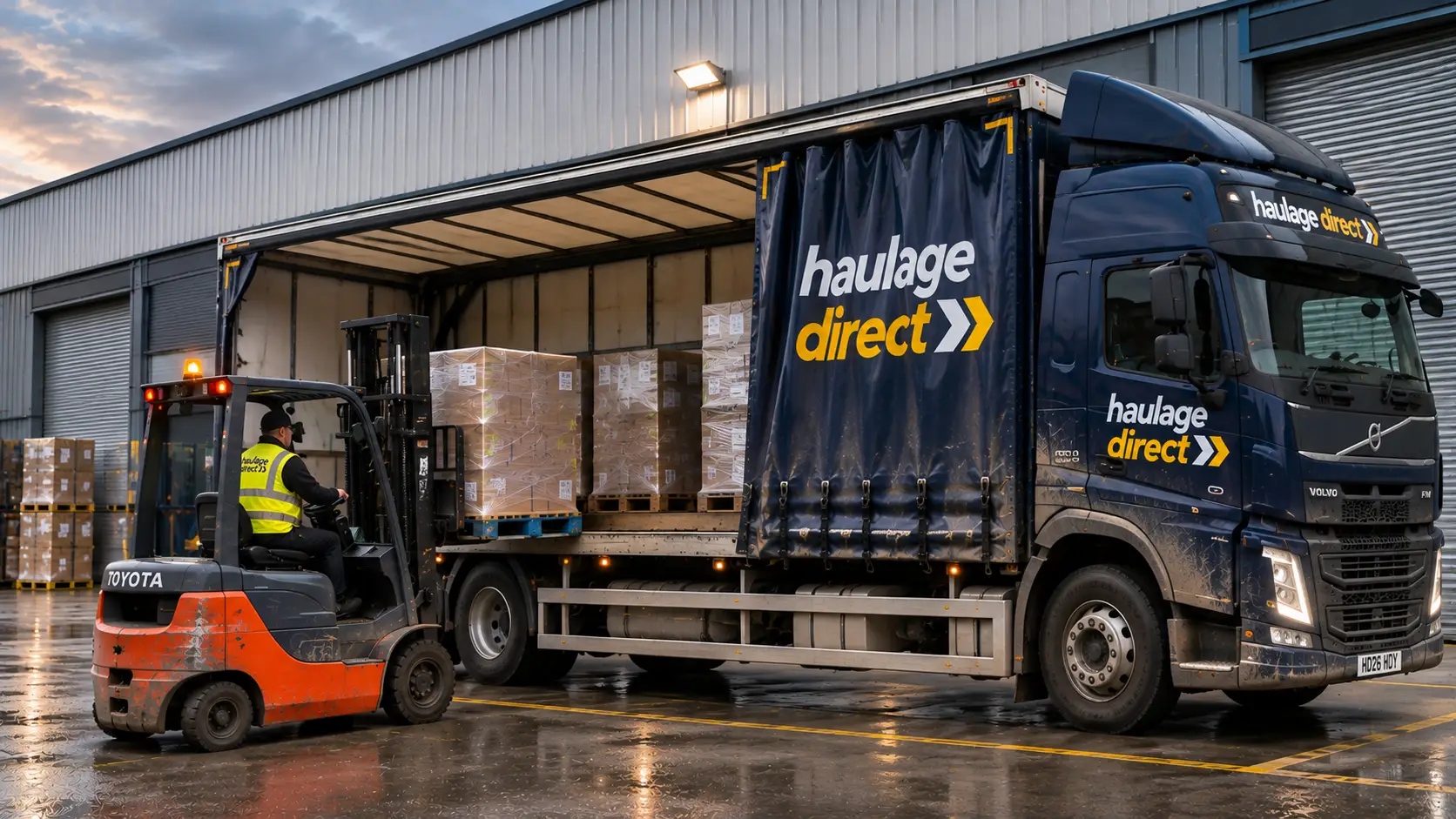
Full truckload haulage is used when a consignment occupies most or all of a vehicle, or when the customer prefers not to combine goods with other shipments. Typical movements include warehouse replenishment, factory dispatches and bulk transfers of palletised products.
A full-load movement can simplify collection planning and reduce intermediate handling, especially where freight is loaded at one site and delivered to another.
Confirm the load plan, gross weight, number of loading metres and any special securing requirements before selecting the trailer.

Need a quotation for full load haulage (ftl)? Tell us where your goods are travelling, what needs moving and when the delivery is required. Call 0203 479 8980 or email info@haulagedirect.co.uk to discuss a suitable transport arrangement.
A full trailer may be selected for volume, weight or the need to keep a consignment together. Goods that fill the floor but are comparatively light present a different planning problem from dense industrial products.
Where a single customer needs exclusive use of a vehicle, part load haulage may be more appropriate.
A full-load movement can simplify collection planning and reduce intermediate handling, especially where freight is loaded at one site and delivered to another.
Full-load does not mean unlimited payload: vehicle and axle weight limits still apply even if the trailer has spare floor space.
For consignments requiring different loading access or equipment, consider dedicated haulage.
Typical movements include warehouse replenishment, factory dispatches and bulk transfers of palletised products.
The best transport arrangement depends on the freight itself, how it can be handled and the operating hours of the sites involved.
Businesses with a different load size or delivery pattern may also benefit from pallet transport.
FREIGHT PLANNED
AROUND YOU

Confirm the load plan, gross weight, number of loading metres and any special securing requirements before selecting the trailer.
Freight details: Confirm the goods description, quantity, gross weight, dimensions and packaging. Include any load restraint or handling instructions.
Site arrangements: Provide collection and delivery postcodes, opening times, booking references and loading or unloading equipment details.
Timing and handover: Specify realistic goods-ready times, delivery appointments and the name of a contact at each site.
Full-load does not mean unlimited payload: vehicle and axle weight limits still apply even if the trailer has spare floor space.
Provide the pallet footprint, loading metres and total gross weight. The transport provider must consider safe restraint and legal axle weights, not simply whether the goods fit inside the trailer.
For related transport requirements, our same day haulage service explains another option.
A quotation should be based on verified shipment information rather than assumptions about pallet count or vehicle capacity. If goods need special lifting, securing, restricted access or cross-border arrangements, these should be raised before a vehicle is confirmed.
Typical movements include warehouse replenishment, factory dispatches and bulk transfers of palletised products. Full truckload haulage is used when a consignment occupies most or all of a vehicle, or when the customer prefers not to combine goods with other shipments.
Confirm the load plan, gross weight, number of loading metres and any special securing requirements before selecting the trailer. Include accurate weight, dimensions and any access restrictions.
Full-load does not mean unlimited payload: vehicle and axle weight limits still apply even if the trailer has spare floor space. Confirm site opening times, loading arrangements and delivery references in advance.
Requests for UK-wide collections and deliveries can be assessed according to route, freight requirements and suitable vehicle availability.
A full-load movement can simplify collection planning and reduce intermediate handling, especially where freight is loaded at one site and delivered to another. The final selection also depends on legal payload limits and the facilities available at both sites.